1) Lead market snapshot
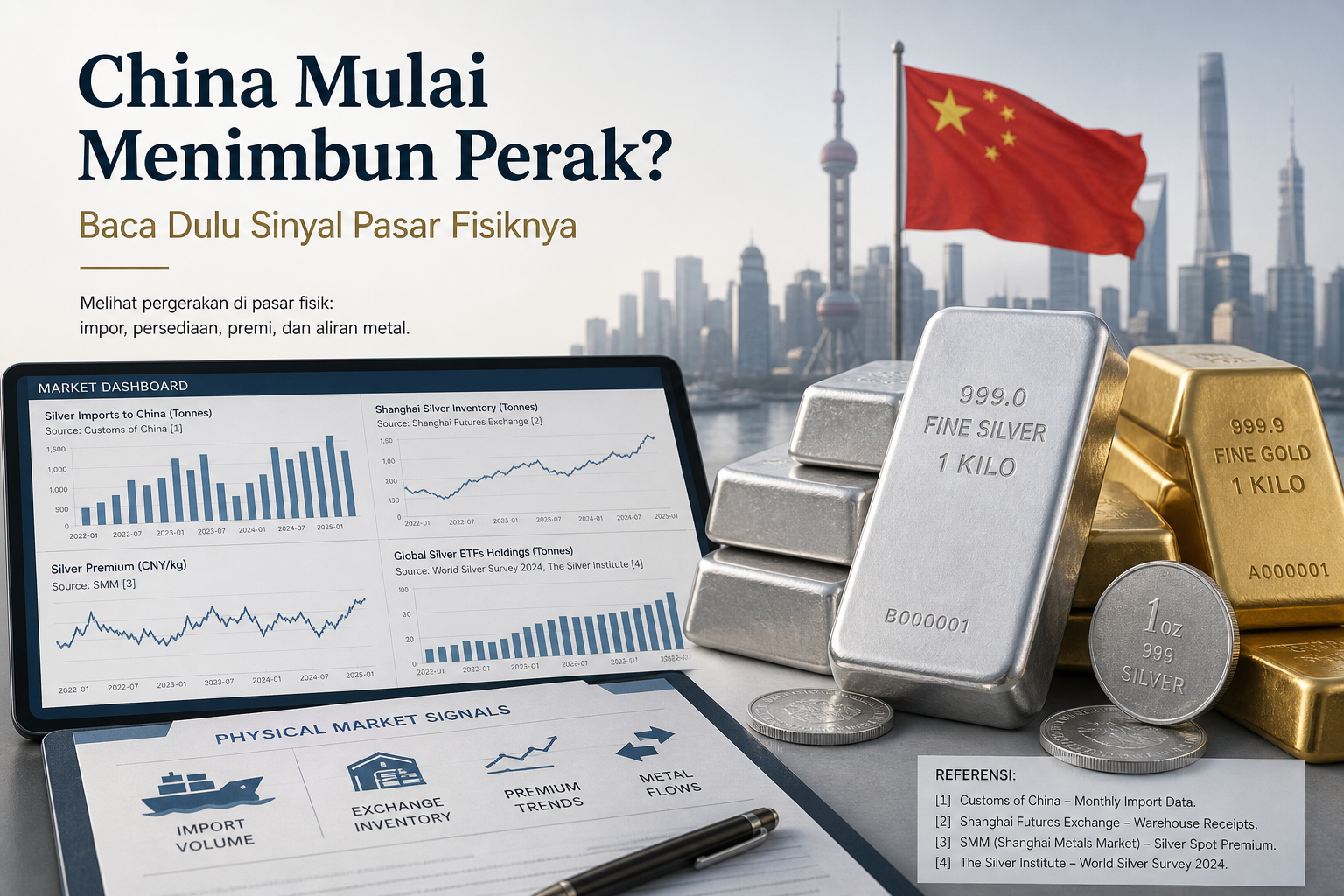
According to Reuters, as published by Investing.com on April 15, 2026, the global silver market is expected to enter its sixth year of structural deficit. The report said 762 million troy ounces of silver have been drawn from stocks since 2021, while the 2026 deficit is projected to widen to 46.3 million ounces, up from 40.3 million ounces in 2025, even as total demand is said to be softer.
That is a calmer starting point for reading the narrative that “China is stockpiling silver.” The issue is not just a story about one country buying more metal. It sits within a physical market that has already been tighter for several years. When inventories keep falling and deficits repeat, any rise in buying from a large industrial user can feel more sensitive to the market.
In bullion terms, silver is also different from gold. Gold is usually read more as a monetary asset and hedge, while silver has a second major leg: industrial demand. That is why reports involving China, photovoltaic demand, and trade policy changes can shape the physical market’s perception, even if they do not automatically determine the price direction.
This article does not use local price data, retail spreads, or internal feeds because none were provided in the source material. The price discussion here is therefore limited to the global market context cited by external sources. The focus is on the signal: is the market seeing strategic stockpiling, accelerated industrial buying, or simply a response to tighter supply conditions?
2) Price context and spread
No spot silver price, local price, or buy-sell spread was included in the source material. Because of that, it would not be correct to conclude that local prices are cheap, expensive, wide, or lagging the global market. A clean editorial approach has to separate supply facts from price conclusions.
What is available is the report that the global market is experiencing repeated structural deficits, that inventories have been heavily drawn since 2021, and that the 2026 deficit is expected to widen versus 2025. That can keep attention on physical silver, especially when there are reports of higher Chinese imports and buying by photovoltaic manufacturers. Even so, those facts are not enough to state a short-term price direction.
Silver is also known to be more volatile than gold because its demand base is split. When the industrial story is strong, silver can get support from manufacturing and clean-energy demand. But when macro uncertainty rises or high rates persist, a non-yielding precious metal can face pressure from the opportunity cost of holding an asset that pays no interest.
The U.S. macro backdrop also remains relevant. The U.S. Bureau of Labor Statistics reported on May 12, 2026 that U.S. CPI-U rose 0.6% month on month in April 2026, after increasing 0.9% in March, while annual inflation reached 3.8%. Core CPI rose 0.4% month on month and 2.8% year on year.
Inflation that remains elevated can support demand for hedges, including precious metals. But at the same time, it can make central banks more cautious about cutting rates. So the inflation signal is not automatically positive for silver without qualification.
The Federal Reserve left the federal funds target range unchanged at 3.50%–3.75% on April 29, 2026. In bullion markets, a relatively high rate environment can limit interest in non-yielding assets. At the same time, markets also watch the U.S. dollar, inflation pressure, and supply risks, all of which can change sentiment.
Against that backdrop, the most reasonable reading is a “central bank watch” mode: silver is not only being judged on inventory and industrial demand, but also on what the policy path may look like next. If inflation keeps rates elevated for longer, precious metals sentiment may stay capped. If the market begins to see room for easing or a weaker U.S. dollar, silver could gain additional support, but that still depends on the next set of data.
3) Main mover or strongest signal
From the available material, the strongest signal is not simply the headline that China is buying silver. The more fundamental signal is Reuters’ report of a continuing structural deficit and the drawdown in stocks since 2021. In physical commodities, inventory is the cushion. When that cushion thins, the market tends to become more sensitive to supply interruptions, policy changes, or short bursts of demand.
That is why the China import report matters more when it is read together with the deficit data. If global stocks were still comfortable, a one-month import spike might be seen only as a trade-flow shift. But when inventories have already fallen sharply and the deficit is expected to continue, stronger buying can reinforce the view that the physical market is tight.
Even so, this editorial does not conclude that China is definitely building an official strategic silver reserve. The source material only mentions higher imports, retail investment demand, and stockpiling by photovoltaic manufacturers according to Investing.com. There is no official customs release in the provided input saying the purpose is a state policy or reserve target.
For that reason, the phrase “China is stockpiling silver” is safer to read as a market narrative, not as a confirmed policy fact. The narrative appears because several signals came close together: reported higher imports, stock building by photovoltaic manufacturers, a change in export tax rebates, and an already-deficit global market. That combination is worth noting, but not exaggerating.
LBMA’s annual survey, cited on April 1, 2026, also highlighted the growth in industrial silver demand in recent years and the role of clean energy as one of the main supports. The report also noted that capacity outside China is increasing, although China remains important in the solar supply chain. That suggests the silver story is not centered on one country alone, but on a broader industrial shift.
For bullion markets, the key point is the quality of demand. Investment demand can change quickly with sentiment, while industrial demand is tied more closely to production, technology, and supply chains. But industrial demand is not fixed either, because manufacturers can reduce silver usage if costs are considered too high.
So readers need to look at both sides. One side is the structural support from deficits, lower inventories, and photovoltaic demand. The other is the risk of industrial adjustment, including silver efficiency gains and possible material substitution. Both are present in the available sources and should be kept in balance.
4) Editorial takeaway
The “China is stockpiling silver” narrative is compelling because it appears while the physical silver market is already being reported as tight. But based on the available material, the narrative is better read as a mix of physical tightness, front-loaded demand, and photovoltaic needs rather than a certainty that prices will move in one direction.
For bullion readers, the main focus should not be a quick conclusion. It should be watching whether the structural deficit continues, whether physical stocks keep falling, and whether industrial demand remains firm even as manufacturers try to reduce silver usage. Reports of Chinese imports can be an important signal, but they still need to be confirmed by official data and the next market reports.
In the short term, the macro backdrop still matters. U.S. inflation that remains elevated, along with the Federal Reserve keeping rates in the 3.50%–3.75% range, leaves precious metals between two forces: demand for hedges and the opportunity cost of high rates. For silver, that tension is amplified by the industrial side of the market.
The editorial conclusion is straightforward: the China-and-silver story deserves attention, but it needs disciplined sourcing. The strongest current signal is a tight physical market and repeated deficits, according to Reuters, reinforced by Investing.com’s reporting on Chinese imports and photovoltaic stockpiling. But without local price data, retail spreads, or additional official confirmation, this article does not draw a price conclusion or offer personal investment advice.
Primary references: Reuters via Investing.com on the structural silver deficit; Investing.com on China imports and photovoltaic stockpiling; Reuters via Investing.com on substitution in the solar industry; the U.S. Bureau of Labor Statistics on April 2026 CPI; the Federal Reserve on the April 2026 rate decision; and LBMA on industrial demand and clean energy.
References
- Reuters via Investing.com (2026). Pasar perak menuju defisit struktural tahun keenam; drawdown stok meningkatkan risiko squeeze. Bullish untuk bullion perak karena stok yang terkuras dan defisit berulang memperbesar risiko lonjakan premium fisik serta squeeze likuiditas, terutama jika pembelian industri atau investasi kembali meningkat.
- Investing.com (2026). China disebut mencatat lonjakan impor perak karena demand ritel dan penimbunan produsen PV. Bullish secara naratif untuk perak fisik: jika produsen PV China benar-benar mempercepat pembelian sebelum perubahan pajak, pasar dapat membacanya sebagai front-loading demand dan kompetisi suplai antara industri dan investor.
- Reuters via Investing.com (2026). Industri surya berupaya mengurangi penggunaan perak setelah harga melonjak tajam. Campuran: kebutuhan PV menopang permintaan struktural, tetapi harga tinggi mendorong thrift/substitution yang bisa membatasi upside jangka menengah jika adopsi alternatif berhasil.
- U.S. Bureau of Labor Statistics (2026). Inflasi AS April 2026 naik 0,6% bulanan dan 3,8% tahunan. Inflasi yang masih tinggi dapat menopang permintaan lindung nilai emas/perak, tetapi juga berpotensi menahan ekspektasi pemangkasan suku bunga yang biasanya positif bagi logam mulia non-yielding.
- Federal Reserve (2026). Fed mempertahankan kisaran federal funds rate di 3,50%–3,75%. Netral hingga bullish moderat: suku bunga yang tetap tinggi menahan minat terhadap logam mulia, tetapi sinyal bias pelonggaran dan pelemahan USD dapat memberi ruang bagi perak jika inflasi dan risiko geopolitik tetap tinggi.
- LBMA (2026). LBMA menyoroti pertumbuhan permintaan industri perak dan peran energi bersih. Bullish struktural untuk perak karena demand industri dan transisi energi memperkuat lantai harga, namun risiko substitusi dan perlambatan solar tetap perlu disebut sebagai counterweight.