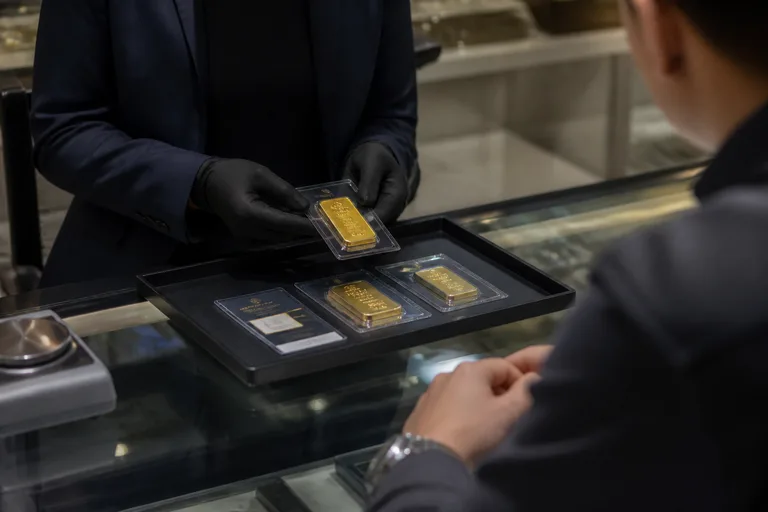
According to the World Gold Council, demand for gold bars and coins in the first quarter of 2026 rose 42% year on year to 474 tonnes. The figure shows that, amid uncertainty, many people still see physical gold as a store of value, not merely as a collectible item or jewelry.
But in personal finance, the question that sits closer to everyday life is not only “is gold attractive?” but also “am I ready to hold gold without sacrificing my cash needs?” This matters, especially for families, workers, and small business owners whose income has to be divided across routine expenses, installments, children’s education, healthcare costs, and working capital.
Physical gold often comes up in conversation when inflation rises, the rupiah moves, or global news feels uncertain. But before getting there, there is one more urgent foundation: an emergency fund. Without an emergency fund, an investment that is fundamentally good may have to be sold at a less-than-ideal time simply because an unexpected need appears.
Bank Indonesia recorded Indonesia’s inflation in May 2026 at 3.08% year on year, still within the stated target range. In practical terms, this means prices are not spiraling out of control, but purchasing power still needs to be protected over time. Increases in daily living costs often feel gradual, yet their impact is real when income does not rise along with them.
This is where an emergency fund and physical gold need to be understood as two different tools. Both can be useful, but they cannot fully replace each other.
An emergency fund keeps everyday finances breathing
An emergency fund is money set aside for unplanned events. Examples include medical expenses, job loss, unexpected vehicle repairs, home repairs, a sudden trip home, or a decline in business turnover.
The key phrase is quick to use. For that reason, an emergency fund is best placed in instruments that are easy to access, relatively stable in value, and do not make us hesitate when the money needs to be used. A separate savings account or dedicated bank account is usually more suitable for this function than an asset whose price moves up and down.
Many financial guides suggest that an ideal emergency fund is around three to six months of expenses. For workers with stable income, three months may be a reasonable starting point. For freelancers, small business owners, or families with many dependents, a longer reserve can provide a more realistic sense of security.
That amount does not need to be reached all at once. If a family’s expenses are Rp6 million per month, a six-month target means Rp36 million. For many people, that number looks large. A healthier approach is to break it into smaller stages: first build one month of expenses, then three months, then increase it gradually.
An emergency fund also protects us from expensive decisions. Without cash reserves, sudden needs often lead to consumer debt, high-interest loans, or selling assets when conditions are unfavorable. In that situation, the problem is not that the asset is bad, but that the financial order is not yet well arranged.
For small business owners in Bali, an emergency fund may even need two layers. The first layer is for household needs, the second for the business. This is important because businesses that depend on seasons, tourism, or daily customer flow can experience busy months and quiet months. If all money is immediately reinvested or used to buy long-term assets, the business may struggle to pay for inventory, rent, wages, or operational needs.
Physical gold works better when it is not forced to be liquid quickly
Physical gold has a different character from an emergency fund. It is better understood as a store of value for the medium to long term. Its purpose is not to replace grocery money or emergency cash, but to help preserve part of one’s assets so they do not depend entirely on cash rupiah or interest-bearing assets.
This discussion becomes even more relevant when people are watching inflation and exchange rates. Bank Indonesia raised the BI Rate to 5.50% on June 9, 2026, as part of its efforts to maintain rupiah stability. For general readers, an interest rate increase like this signals that the authorities are trying to maintain confidence in the currency and contain external pressure.
Globally, the Federal Reserve kept the United States benchmark interest rate in the range of 3.50%–3.75% in June 2026. U.S. interest rate policy matters for gold because it can affect the U.S. dollar and investor interest in assets that generate yield. Gold does not pay interest like deposits or bonds, so its price can be influenced by changes in market appetite for interest-bearing assets and stores of value.
For households, however, the details of global markets do not need to make decisions complicated. The main point is simple: gold prices can rise and fall in the short term. For that reason, physical gold should not be used as a place to keep money that may be needed next week or next month.
If someone buys gold using money that is actually meant for school fees, rent, loan installments, or business capital, they put themselves in a fragile position. When a need arises, the gold may have to be sold quickly. Yet the resale price is not always the same as the purchase price, because there are spreads, production costs, distribution costs, and market factors.
The London Bullion Market Association provides information on the LBMA Gold Price as one reference for international gold prices. In local practice, physical gold prices are usually influenced by global prices, the rupiah exchange rate, bar size, minting costs, taxes or related fees, and the spread between the buying price and the resale price. This is why gold is more comfortable to treat as a savings asset, not a daily wallet.
Gold denominations also affect convenience. Smaller bars are easier to buy gradually and more flexible when you want to liquidate only part of your holdings. However, smaller denominations usually carry a higher cost per gram than larger ones. Larger bars can be more efficient in terms of price per gram, but they require more initial capital and are less flexible if you only need to sell a small amount.
So the sequence is not “emergency fund or gold forever,” but rather “build the emergency fund first until it is safe, then let gold enter according to the room available.” Once a minimum emergency cash reserve is in place, a person can begin setting aside small amounts regularly for physical gold without disturbing their main needs.
For example, a worker with monthly expenses of Rp5 million could set an initial emergency fund target of Rp15 million for three months. Until this target is reached, the main focus should be cash. Once it has been built, only then can part of the monthly money that is truly spare be directed into gold investment, while still keeping the emergency account from being used for ordinary spending.
For families, budget categories can be made clearer. There can be an operating account for monthly spending, an emergency fund account, short-term goal savings, and longer-term assets such as physical gold. This separation helps prevent one financial goal from disrupting another.
For business owners, the discipline of separation is even more important. Business money should not be fully mixed with household money. If you want to hold gold, use profit that has genuinely been set aside after operational needs, taxes, wages, inventory, and business reserves have been met. This makes gold part of planning, not an emotional escape when inflation news appears.
There is also a psychological side that is often overlooked. Physical gold feels real because it can be seen and stored. For some people, this physical form helps restrain the urge to spend because the asset is not as easy to use as swiping a card or transferring a balance. But that sense of safety still needs to be accompanied by an understanding of storage, authenticity, documents, and the risk of loss.
Holding physical gold means thinking about a safe place to store it. This could be a personal safe, a safe deposit box, or another storage system that suits one’s needs. Each option has costs and consequences. If the amount of gold is still small, storing it at home may feel sufficient, but security still needs to be taken seriously.
Authenticity and seller reputation also matter. The official Elzan Gold website, for example, explains its focus on physical gold bullion, silver, and precious metals in Bali. Mentions like this are relevant because people who are new to precious metals often need basic explanations about certificates, denominations, resale prices, and the difference between gold bars and jewelry. Information of this kind helps buyers understand the product before making a decision.
But understanding gold does not mean having to rush into owning it. If there is no emergency fund at all, the strongest step is precisely to build the first cash reserve. Start with small but consistent amounts: Rp20,000, Rp50,000, or Rp100,000 every time income is received. The goal is not to look big at the beginning, but to build the habit of setting money aside before it runs out.
Once an initial emergency fund has been formed, gold investment can be done more calmly. A person does not need to wait until they feel wealthy to start learning, but they also do not need to force a gold purchase at the expense of basic needs. Financial health often comes from the right sequence, not from choosing the asset that looks most attractive.
One simple approach is to ask three questions before buying physical gold. First, are one to three months of living expenses already secure? Second, is there any high-interest consumer debt that is more urgent to pay off? Third, will the money used to buy gold not be needed in the near future?
If the answers to all three are sufficiently safe, gold can begin to become part of the plan. If not, it does not mean gold is unsuitable; the timing may simply not be right yet. Delaying an asset purchase to build a cash foundation is not a setback; it is a sign of a mature decision.
In an environment where inflation needs to be monitored and exchange rates can move, it is natural for people to look for ways to preserve asset value. Physical gold has a place in that conversation, especially for a longer horizon. But an emergency fund remains the first fence that protects everyday life from shocks.
A healthy sequence is usually simple: secure cash, tidy up debt, separate goals, then build assets. In this way, gold does not become a burden when circumstances suddenly change. It becomes part of a financial plan that is calmer, more aware of risk, and better suited to real needs.
References
- World Gold Council (2026). World Gold Council: permintaan emas batangan dan koin naik kuat pada Q1 2026. Mendukung angle bahwa emas fisik tetap dipandang sebagai instrumen penyimpan nilai oleh investor global, terutama saat ketidakpastian meningkat. Relevan untuk menjelaskan perbedaan emas fisik sebagai aset jangka panjang versus konsumsi perhiasan.
- Bank Indonesia (2026). Inflasi Indonesia Mei 2026 tercatat 3,08% yoy dan masih dalam sasaran BI. Memberi konteks lokal bahwa pembahasan emas fisik sebaiknya dikaitkan dengan perlindungan daya beli jangka panjang, bukan kepanikan inflasi jangka pendek.
- Bank Indonesia (2026). Bank Indonesia menaikkan BI-Rate menjadi 5,50% pada 9 Juni 2026 untuk stabilisasi rupiah. Relevan untuk menjelaskan bahwa emas fisik sering masuk pembahasan diversifikasi ketika masyarakat menghadapi volatilitas kurs, namun tetap perlu diseimbangkan dengan instrumen likuid dan profil risiko pribadi.
- Federal Reserve (2026). Federal Reserve mempertahankan suku bunga acuan AS di kisaran 3,50%–3,75% pada Juni 2026. Membantu artikel menjelaskan mengapa harga emas tidak hanya dipengaruhi inflasi lokal, tetapi juga kebijakan moneter global dan pergerakan dolar AS.
- London Bullion Market Association (2026). LBMA Gold Price sebagai acuan harga emas global yang diadministrasikan secara formal. Memperkuat edukasi pembaca bahwa harga beli dan buyback emas fisik tidak selalu sama dengan harga spot internasional karena ada faktor kurs, premium, pajak/biaya, dan spread.
- Elzan Gold (2026). Elzan Gold menyajikan emas, perak, dan logam mulia fisik untuk simpanan aset di Bali. Berguna untuk transisi editorial yang tidak promosi: pembaca dapat diarahkan memahami aspek dasar emas fisik seperti sertifikat, pecahan, spread, penyimpanan, dan tujuan investasi sebelum mengambil keputusan.