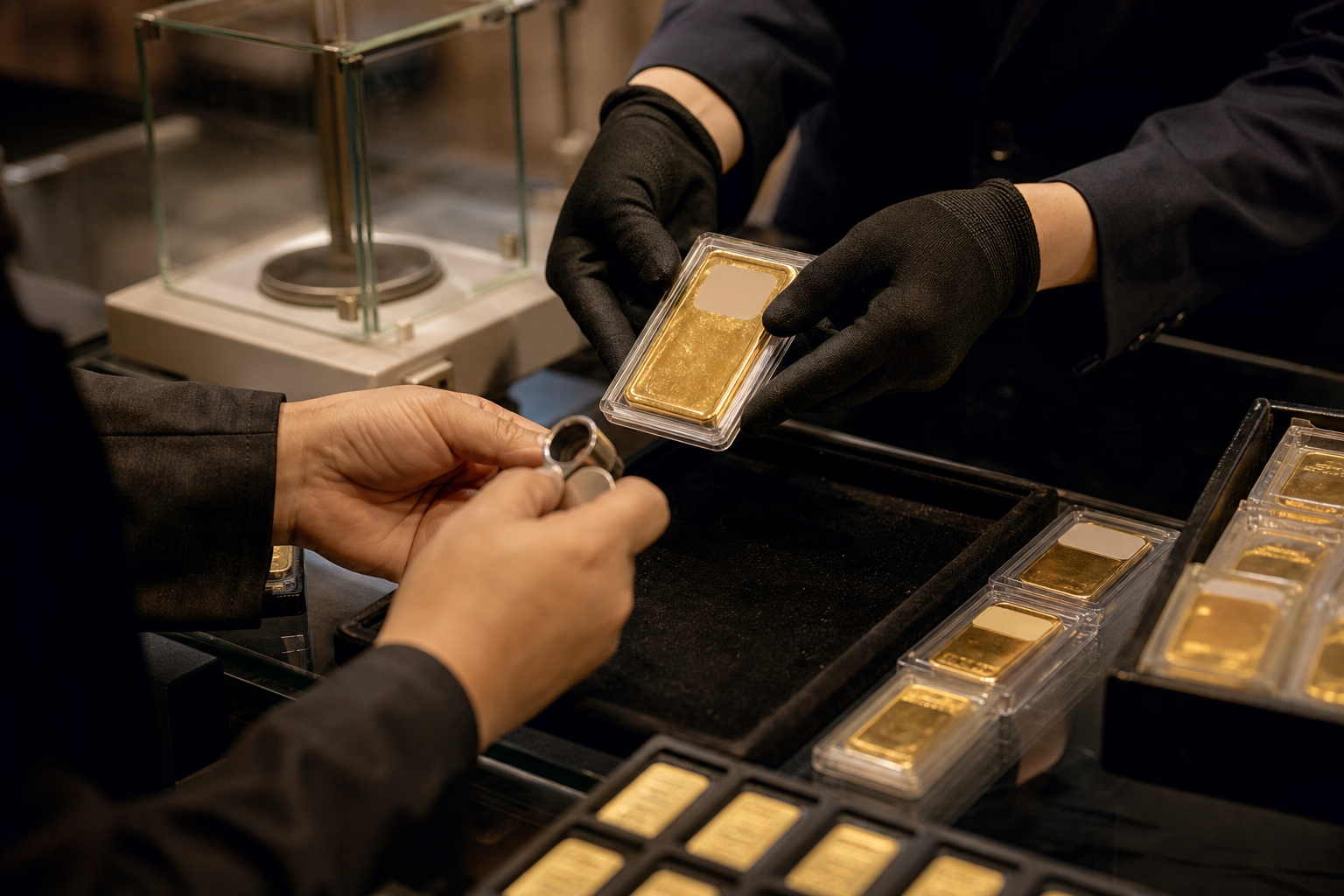
According to Pegadaian, a buyback is a transaction in which a gold owner sells their gold back to a provider, and the difference between the gold selling price and the buyback price on the same day is known as the spread. This is important to understand from the start, because many people only notice the gap when they are ready to sell their gold back.
Imagine someone buys a gold bar today, then wants to sell it a few days later. They may be surprised that the price offered by the provider is lower than the price they paid. Meanwhile, gold prices in the news may appear stable or even slightly higher.
This situation is not unusual in physical gold transactions. From the consumer’s perspective, the purchase price is usually the retail price, which already includes the value of the gold, production costs, distribution, business margin, and service. The buyback price, meanwhile, is the price a provider uses when buying gold back from customers.
Confusion often comes from the terminology. When a shop displays a “selling price,” it usually means the price at which the shop sells gold to buyers. When it displays a “buyback price,” it means the price at which the shop buys gold back from customers. From the buyer’s point of view, the shop’s selling price is the gold purchase price, while the buyback price is the resale price.
This gap is why gold is better understood as a medium- to long-term store-of-value asset, not an instrument for very short-term trading. If gold is sold too soon after purchase, the gold price needs to rise enough first to cover the spread. Without this understanding, buyers may easily feel that the buyback price is “unfair,” even though the mechanism is simply different from retail pricing.
The gold spread is not just a discount
The gold spread is the gap between the gold selling price and the buyback price at the same point in time. The wider the spread, the greater the increase in gold prices needed for the owner to avoid a loss when selling back. This is the most important practical implication: before buying, do not look only at the retail price, but also check the buyback benchmark.
The spread exists because gold providers run a business, not merely a storage counter for goods. They need to cover the costs of stores, systems, staff, packaging, security, delivery, authenticity verification, and the risk of price movements. These components are not always visible to buyers, but they help shape the transaction price.
With physical gold, there are also costs related to the product form. Gold bars must be minted, packaged, certified, and distributed. Smaller products often feel more expensive per gram than larger ones because fixed costs are spread across fewer grams. That is why buyers looking for efficiency usually compare the gap per gram, not just the final nominal price.
Price risk also plays a role. A provider that buys gold back from a customer may not immediately resell it at the same moment. During that interval, global gold prices and exchange rates can move. To keep this risk under control, providers set buyback prices with a certain safety margin.
According to the official Logam Mulia ANTAM website, the buyback value of gold follows the buyback price in effect at the time of the transaction. In other words, the resale price does not refer to the price at which the gold was first purchased. If someone bought at a high price and then sells when the buyback benchmark has fallen, the proceeds can be lower even if the gold is genuine and complete.
This is a common source of misunderstanding. Buyers remember the purchase price as “the value of my gold,” whereas the market values gold based on today’s price. An old receipt is important as proof of transaction, but it does not guarantee that a provider will buy the gold back at the old price.
Each provider’s policy can also differ. Some openly display daily buyback prices, some require an in-person check, some differentiate between certain products, and some apply deductions if packaging or documents are incomplete. As a result, two places may offer different buyback prices for products that look similar.
This is where transparency matters. Elzan Gold, for example, displays retail prices and buyback benchmarks so buyers can see the price gap before transacting. Information like this helps buyers make calmer decisions, because the difference is visible from the start instead of only appearing when they want to sell.
Transparency does not mean the spread disappears. What changes is that buyers can calculate more realistically. If the goal of buying gold is to store value, buyers can estimate roughly how long they may need to hold the gold for the chance of covering the spread to become more reasonable.
Beyond the basic spread, the physical condition of gold can affect the resale outcome. Logam Mulia ANTAM explains in its official FAQ that ANTAM LM products come with certificates and 999.9 fineness. The same source also explains that a lost or damaged certificate may result in a deduction during buyback.
The implication is simple: do not treat certificates and packaging as optional extras that can be ignored. For buyers, certificates, packaging, and proof of purchase are part of the resale value. Keeping them properly can support the verification process and reduce the possibility of additional deductions.
The same applies to the condition of the product. Gold bars that are dented, heavily scratched, have damaged packaging, or have product identifiers that are difficult to read may require a longer inspection. Although the gold content remains valuable, providers may treat the product differently because the verification risk and cost increase.
There is also a difference between gold bars and jewelry. With jewelry, the purchase price often includes workmanship costs, design, brand, and purity levels that may differ from pure gold bars. When resold, the design component and workmanship cost are usually not valued in full as they were at purchase. That is why people whose main goal is investment often prefer standardized gold bars that are easy to verify.
How to reduce losses when selling gold
The first step is to compare the gold selling price and buyback price before buying, not only when you are about to sell. If a provider clearly displays both prices, buyers can see the gold spread from the beginning. The clearer the information, the smaller the chance that buyers will make decisions based on assumptions.
The second step is to avoid buying gold with money that may be needed very soon. If the funds may have to be used within a few weeks or a few months, the spread can feel burdensome. Gold is more comfortable to use as savings that do not need to be liquidated suddenly.
The third step is to keep all supporting items. Certificates, packaging, receipts, and transaction proofs should be stored in a dry and safe place. If you buy several pieces, separate the documents according to each product so they do not get mixed up during verification.
The fourth step is to monitor the buyback benchmark before selling. Because buyback prices follow daily market conditions, selling on the wrong day can result in lower proceeds. Buyers do not have to guess the price peak, but they should at least understand whether the price is far below expectations or still within an acceptable range.
The fifth step is to sell to a place with clear procedures. Providers that explain the buyback process, document requirements, inspection method, and price benchmark are usually easier to evaluate. For buyers in Bali and other regions, choosing a provider with open price information can reduce hesitation when letting go of gold.
The sixth step is to understand that the nominal spread is not the only measure. Sometimes a provider with a slightly higher buyback price has a longer process or more complicated requirements. Conversely, a provider with a fast process may have a different spread. What matters is finding the most reasonable combination: clear pricing, a fair process, and a reputation that can be checked.
The seventh step is not to panic-sell just because prices fall briefly. Gold is often chosen as a store-of-value asset, but its price can still move up and down. If the reason for selling is not urgent, giving it time can help avoid emotional decisions.
Indonesia’s Financial Services Authority, through its FAQ on POJK 17 of 2024, also provides context that bullion business activities in Indonesia operate within a specific regulatory framework, especially for financial services institutions that carry out gold-related activities. For consumers, the practical point is not to memorize the rules, but to choose parties with clear legality, procedures, and information.
In the end, the difference between the buyback price and the purchase price is not a sign that gold is a bad asset. The gap is part of how physical gold transactions work. What usually causes buyers to suffer larger losses is not the spread alone, but buying without understanding the difference, selling too quickly, or neglecting the product’s supporting documents and packaging.
If from the beginning buyers look at the retail price, buyback benchmark, product condition, and their purpose for holding gold, buying and selling decisions will feel more rational. Gold does not need to be treated like an item that must always generate a quick profit. It is better positioned as an asset whose costs are understood, whose supporting items are kept complete, and which is sold back at a time that truly matches the buyer’s needs.
References
- Logam Mulia ANTAM (2026). Simulasi Buyback Emas ANTAM Logam Mulia. Mendukung edukasi bahwa nilai jual kembali emas batangan mengikuti harga buyback yang berlaku saat transaksi, sehingga investor perlu memantau harga dan spread sebelum menjual.
- Logam Mulia ANTAM (2026). FAQ Logam Mulia: Sertifikat, Keaslian, dan Potongan Buyback. Memperkuat anjuran menyimpan sertifikat, kemasan, dan bukti pembelian agar harga jual kembali tidak terkena potongan tambahan.
- Pegadaian (2026). Apa Itu Buyback Emas dan Waktu Terbaik Melakukannya. Memberi dasar edukatif bahwa selisih harga jual dan buyback adalah komponen normal dalam transaksi emas, bukan otomatis indikasi penipuan.
- Pegadaian (2026). Kenapa Harga Beli Emas Lebih Mahal dari Harga Jual?. Membantu menjelaskan bahwa harga ritel emas mencakup komponen selain nilai logam murni, sementara buyback menyesuaikan harga pasar dan kebijakan penyedia.
- Elzan Gold (2026). Elzan Gold: Bullion Emas, Perak, dan Logam Mulia untuk Simpanan Aset. Relevan sebagai contoh lokal bahwa penyedia yang menampilkan harga retail dan acuan buyback membantu konsumen mengecek spread sebelum membeli atau menjual emas.
- Otoritas Jasa Keuangan (2024). FAQ POJK 17 Tahun 2024 tentang Penyelenggaraan Kegiatan Usaha Bulion. Menambah konteks kepercayaan bahwa pembaca sebaiknya memilih penyedia emas yang jelas legalitas, prosedur, dan transparansi harganya, terutama saat transaksi buyback.