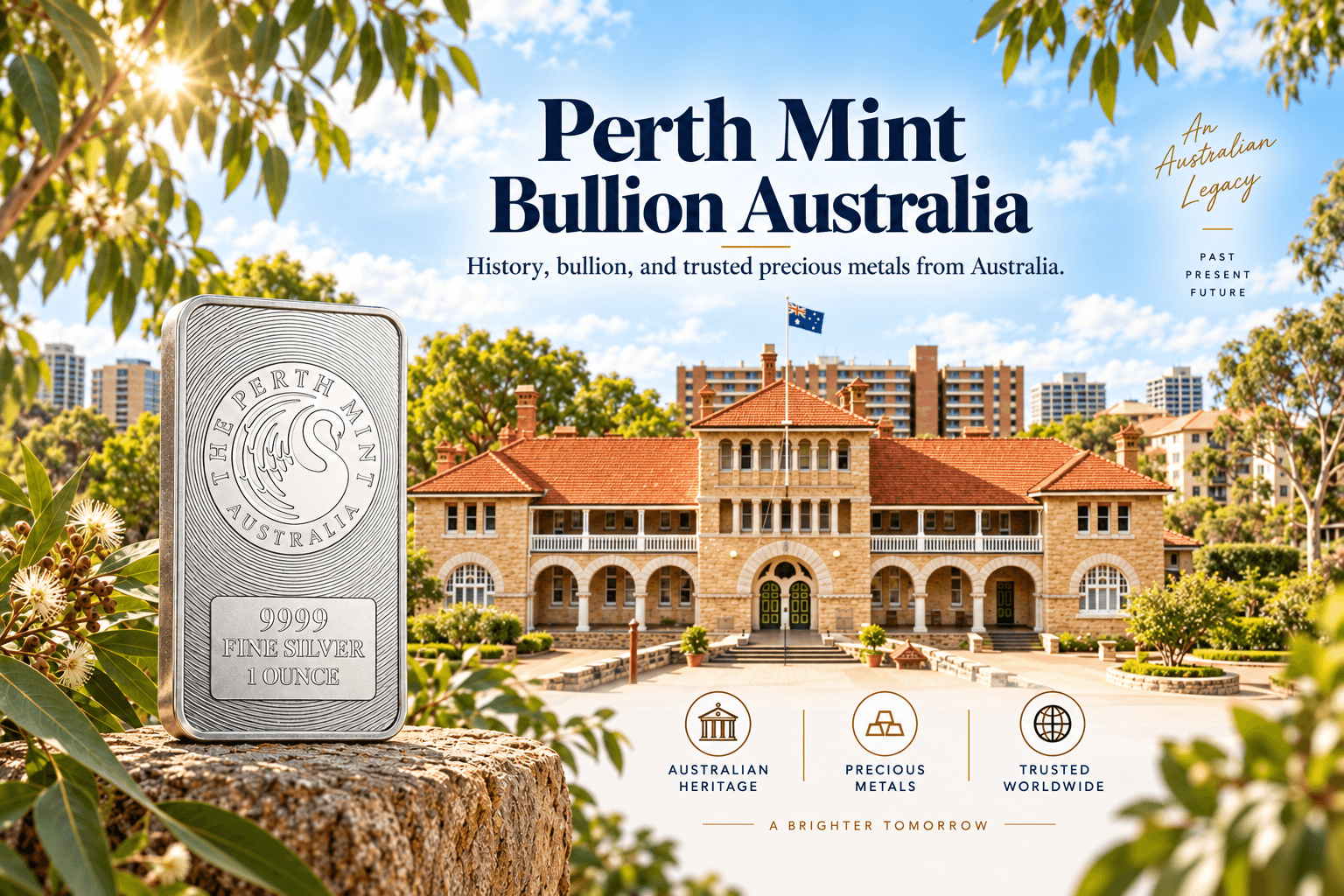
The name Perth Mint often comes up when people begin comparing international gold and silver bullion. For Indonesian readers, it may sound less familiar than Antam, but in the global market the Perth Mint is one of the precious metals institutions with a long history, especially because of its position in Western Australia, an important region in the world’s gold industry.
The Perth Mint was established in 1899 as a branch of Britain’s Royal Mint. At the time, Australia was still within the orbit of the British Empire, and the main purpose of setting up a mint was to process mined gold into a more official, measurable form that could be used within the monetary system.
The context matters. Western Australia was experiencing a wave of gold discoveries that drew miners, traders, and workers to the region. Gold coming out of the mines could not simply be weighed roughly. It needed to be refined, assayed, and turned into coins or bars that banks, merchants, and governments could trust.
This was where the Perth Mint played its early role. It was not merely a historic building, but part of the economic infrastructure. Without a credible refining and minting facility, gold from the mines would have had a harder time entering formal trade channels.
From mined gold to market trust
In its early years, the Perth Mint’s function was closely tied to Western Australia’s gold mining industry. Gold from mining districts was brought to the facility to be refined and minted. This process helped turn raw metal into an asset that was easier to accept because its weight and purity had been standardized.
For modern investors, the word “standard” may sound simple. But in the world of precious metals, standards are the foundation of trust. Buyers of physical gold are not only buying the metal’s shine; they are also buying the assurance that the product has a clear weight, purity, and origin.
The Perth Mint grew out of that basic need. As Australia’s gold production expanded, institutions capable of refining and minting metal through orderly processes became increasingly important. Reputation does not come merely from having an old name, but from the ability to maintain quality consistently over a long period.
As a branch of the Royal Mint, the Perth Mint initially operated within the British coin-minting tradition. This gave it a strong framework in terms of procedures, assay practices, and production standards. In the precious metals market, a connection to an official institution of this kind carries significant weight because it affects the confidence of buyers and industry participants.
Over time, Australia developed into a country with a highly important gold mining industry. The Perth Mint moved along with that development. Its role did not stop at processing mined gold; it expanded into producing precious metals for collecting, investment, and international trade.
The next major change came when the Perth Mint was no longer managed solely as a branch in the British Royal Mint model. In its modern development, the Perth Mint became an institution operated within Western Australia’s own framework. This shift matters because it shows a transition from a colonial function to a modern precious metals institution representing Australia’s own industrial capacity.
For Indonesian readers, this shift can be imagined as the change from a branch office of an overseas institution into a local institution that still carries international standards. Its identity became more Australian, while its historical reputation remained attached.
In the bullion market, history like this has practical value. Investors usually look for products that are easy to recognize, easy to verify, and supported by a broad secondary market. A long-established producer’s name helps reduce doubt, especially when products are traded across borders.
Entering the modern bullion era
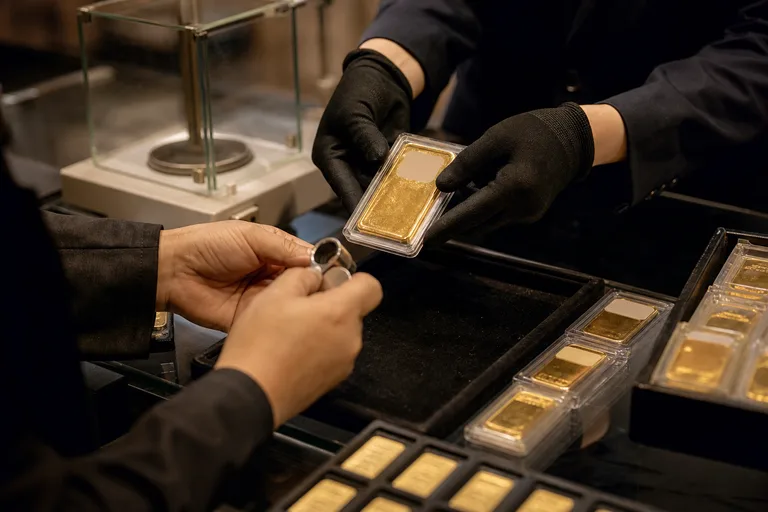
Bullion refers to physical gold or silver whose value primarily follows its precious metal content. It may come in the form of bars, coins, or other products with a specified weight and purity. Unlike jewelry, bullion is usually more focused on metal value, rather than design, workmanship costs, or fashion value.
The Perth Mint later became widely known as a modern bullion producer. Perth Mint gold and Perth Mint silver products are available in various sizes, from small pieces for retail buyers to larger formats for investors who want to store value in physical metal.
One of the Perth Mint’s strengths is its ability to combine industrial function with design. Bullion products do not have to be plain. Many international gold and silver coins have distinctive designs that change or are refreshed over time. Strong design makes a product easier to recognize, while standardized purity and weight keep it relevant as a precious metals investment instrument.
Kangaroos, kookaburras, koalas, and other Australian wildlife motifs are often associated with Perth Mint products. For the international market, these visual elements help build identity. People do not see them merely as gold or silver, but as Australian bullion with a distinctive character.
Still, a bullion reputation cannot be built on attractive imagery alone. What matters more is production quality, purity consistency, packaging, certification, and the product’s ability to be accepted back by the market. A beautiful product that is hard to recognize or whose origin is questionable will lose out to a more standardized product that is easier to verify.
Beginner investors need to understand this from the outset. When buying physical gold or silver, the producer’s brand is not just about prestige. The brand helps the market assess whether the product is commonly traded, whether its specifications are clear, and whether the next buyer will feel confident enough to accept it.
The Perth Mint has a strong reputation because it sits at the intersection of several factors: a long history, proximity to Australia’s gold mining industry, well-known production standards, and international distribution. This combination is why its name often appears in discussions of global bullion.
Another strength of the Perth Mint is its position in Australia, a country known as one of the world’s important gold producers. When a mint is close to a large mining ecosystem, its supply chain feels more coherent to the market. In other words, there is a clear connection between the source of the metal, the refining process, and the final product.
In investment practice, this kind of reputation supports liquidity. Liquidity means the ease of reselling an asset without having to explain too much from the beginning. Products from well-known international mints are usually recognized more quickly by buyers, dealers, or collectors than products with unclear origins.
Of course, this does not mean every Perth Mint product is automatically suitable for everyone. Investors still need to consider the purchase price, buy-sell spread, taxes, shipping costs, product authenticity, packaging condition, and where they buy it. The producer’s reputation is an important factor, but it is not the only one.
For Indonesian readers, comparing the Perth Mint with a local producer such as Antam can help clarify the difference. Antam is very strong in the domestic market because Indonesian buyers recognize it easily. The Perth Mint is better known in the context of international bullion, especially among people comparing gold and silver products from different countries.
Both can occupy different places in someone’s strategy. If the main goal is ease of buying and selling in Indonesia, products that are very well known locally often feel practical. If someone wants to understand the global bullion market or collect international silver and gold coins, the Perth Mint is one of the names worth studying.
Perth Mint silver products are also interesting to discuss because silver often serves as an entry point for beginners who want to experience owning international bullion at a more affordable nominal price than gold. However, physical silver has different characteristics. It takes up more volume for the same value, the buy-sell spread can be wider, and storage needs to be considered more carefully.
Silver coins from well-known mints are usually favored because they combine metal content, design, and brand recognition. But buyers still need to distinguish between bullion value and collectible value. If a coin is sold far above its metal value because of its design, rarity, or special edition status, then the purchase decision is no longer purely about metal investment; it has also entered the realm of collecting.
The same applies to gold. Bars are usually more directly understood as a store of precious metal, while certain coins may carry elements of design and collectibility. Neither is automatically better; what matters is that the buyer understands what they are paying for.
The history of the Perth Mint helps explain why its products did not appear out of nowhere. From a facility built to process gold from Western Australia’s gold rush, the Perth Mint developed into a bullion producer recognized across countries. Its journey shows how market trust is built through time, standards, and consistency.
For people who are new to physical gold and silver, understanding a producer’s history can make decisions feel more grounded. We are not only looking at today’s price, but also understanding why a name is trusted, how the product enters the market, and what makes it easy to recognize.
Ultimately, the Perth Mint is an example of how precious metals are not only about weight and purity. Behind every bar or coin, there is an institutional history, a refining system, design, distribution, and reputation that all help shape market confidence. Understanding these factors makes beginner investors better prepared to choose products, whether from local producers or from international mints such as the Perth Mint.